

Key Takeaways: Answer Engine Optimization (AEO) requires shifting your keyword strategy from high-volume short-tail search terms to long-tail conversational questions. Traditional SEO tools must be paired with specialized query mapping tools to uncover user intent. By building a question-first strategy, brands can capture voice assistant answers and AI citations instead of just blue link listings.
Answer Engine Optimization (AEO) is changing how we approach digital marketing. It is all about formatting content for voice search and smart assistants.
Traditional search engine marketing focuses on keywords for search engines. AEO, however, targets natural language queries.
This shift requires new tools and strategies. Keyword research tools for AEO are essential for success and complement standard search marketing keyword research. These tools help identify questions users ask and suggest content ideas that match user intent.
In this guide, we will explore the top AEO tools and how they can enhance your digital marketing strategy.
What Is AEO and Why Does It Matter?
Answer Engine Optimization (AEO) focuses on meeting the needs of voice-activated searches. It uses natural language to align content for digital assistants like Siri and Alexa.
With the rise of voice search, AEO has gained importance in digital marketing. People now use conversational language, making AEO essential for content visibility.
AEO helps content appear as featured snippets, improving accessibility. These snippets attract attention and drive more organic traffic compared to standard search results.
Key benefits of AEO include:
- Enhanced visibility in voice search results
- Improved engagement with target audiences
- Increased organic traffic through strategic content alignment
By applying AEO, businesses can stay ahead in the competitive world of voice search technology.
How Keyword Research Differs for AEO vs. Traditional SEO
Traditional keyword research focuses on aligning for text-based queries and search engines. It typically involves short-tail keywords with high search volume.
In contrast, AEO emphasizes long-tail keywords that mirror conversational user queries. This is key to addressing specific questions posed in natural language.
Instead of focusing solely on search engine rankings, AEO targets voice query relevance. This requires understanding conversational patterns and user intents.
Key differences include:
- Use of natural language queries
- Focus on user intent and context
- Emphasis on appearing in featured snippets
By adapting to these differences, businesses can effectively integrate AEO into their digital strategies.
Key Features to Look for in AEO Keyword Research Tools
When selecting AEO keyword research tools, focus on features that enhance the content development process. These tools should cater to voice-driven queries and conversational content, and the best keyword research software will make that easier.
Critical features include the ability to predict user intent. Tools that prioritize user context excel at enhancing AEO. Moreover, integration with AI can offer personalized content ideas.
Look for tools with:
- Extensive long-tail keyword databases
- Features for tracking keyword performance over time
- Capabilities to analyze competitor strategies in depth
With these features, you will effectively target relevant keywords. This drives structured content creation for enhanced visibility with the right keyword analysis tools.
Top Keyword Research Tools for AEO
Exploring the right tools is key for improving AEO efforts. These tools can greatly enhance visibility and engagement. They focus on understanding user queries and adapting content accordingly.
Below are some top choices to consider. Each offers unique features to aid in voice search alignment. They provide a competitive edge in search results.
1. SEMrush
SEMrush offers in-depth keyword research software. It excels at identifying keyword opportunities and trends. The tool also includes competitive analysis features.
Key aspects of SEMrush:
- Effective at tracking keyword performance
- Provides insights into competitors' keyword strategies
- Features tools for aligning content for voice searches
With SEMrush, marketers can uncover valuable keywords. This leads to improved AEO strategies.
2. Ahrefs
Ahrefs is a powerful choice among keyword analysis tools. It assists in understanding search behaviors and keywords. Users can identify gaps in their current strategies.
Key benefits of Ahrefs:
- Vast database of search queries
- Detailed competitor analysis features
- Provides insights into high-conversion keywords
Ahrefs is ideal for those looking to deepen their AEO approach.
3. AnswerThePublic
AnswerThePublic specializes in visualizing user questions. This tool captures the curiosity behind keywords. It is great for discovering content ideas that resonate.
AnswerThePublic advantages:
- Generates a wide array of user queries
- Creates visual data representations
- Identifies content gaps and opportunities
This tool helps match content to what audiences are asking.
4. AlsoAsked
AlsoAsked offers insights into what people search for next. It uses queries to unveil additional questions. This helps in creating thorough content.
Key features of AlsoAsked:
- Tracks related user questions
- Provides deeper context for primary keywords
- Aids in creating detailed content outlines
Utilizing AlsoAsked leads to thorough answer-focused content.
5. Otterly.AI
Otterly.AI leverages AI for AEO keyword discovery. It is adept at understanding user intent and trends. This tool helps tailor content for specific audiences.
Key features of Otterly.AI:
- AI-driven keyword predictions
- Insights into emerging search trends
- Tools for aligning personalized content
Otterly.AI is perfect for those aiming to capitalize on AI in AEO.
6. Google Keyword Planner
Google Keyword Planner is an essential AEO tool. It provides data on search volumes and trends. This helps in identifying priority keywords.
Core features include:
- Search volume insights
- Competition analysis
- Identification of trending keywords
Using this tool aids in crafting metrics-backed AEO strategies.
7. Ubersuggest
Ubersuggest is versatile and user-friendly. It uncovers new keywords and SEO opportunities. The tool also includes competitive insights.
Features of Ubersuggest:
- Keyword suggestions and SEO analysis
- Insights into competitor performance
- Easy-to-navigate interface
It assists users in building complete AEO keyword strategies.
8. Surfer SEO
Surfer SEO focuses on content alignment. It integrates keyword analysis with content grading. This helps align content thoroughly.
Surfer SEO offers:
- Real-time keyword suggestions
- Content performance analysis
- Enhanced content refinement tools
Surfer SEO stands out for those prioritizing content refinement in AEO.
Using LLMs and AI Prompts for AEO Keyword Discovery
Using Large Language Models (LLMs) and AI prompts can transform keyword research for AEO. These advanced technologies predict user intent by analyzing vast amounts of data. This allows for highly personalized content strategies tailored to user needs. Teams experimenting with keyword research tools for AEO in LLMs can prototype an effective AEO prompt library to standardize analysis and idea generation.
The advantages of using LLMs and AI prompts include:
- Enhanced understanding of user intent
- Real-time adaptation to trending topics
- Insightful content suggestions based on data
These tools enable marketers to refine their AEO strategies, ensuring content remains relevant and engaging for their target audiences.
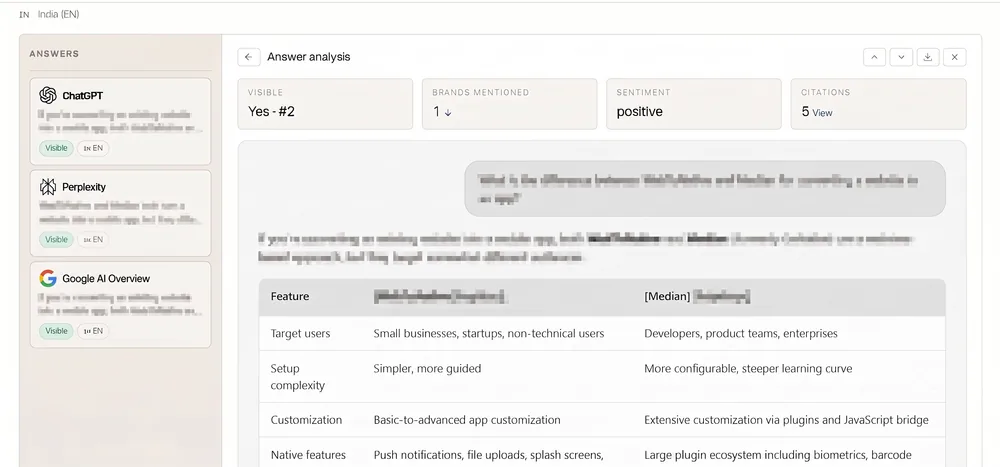
While keyword research tools are great for discovering prompts, you need a way to track whether your efforts actually win citations. Specialized platforms like Visiby complement these tools by tracking your brand's citation share and competitive visibility across ChatGPT, Perplexity, and Google AI Overviews.
06 — StrategyHow to Build an Effective AEO Keyword Strategy
Crafting a solid AEO keyword strategy starts with understanding user queries. Focus on questions people ask and the context behind them. This helps create content that answers specific needs. Combine insights from SEO keyword research with AEO-specific findings.
Analyze competitors to identify keyword gaps in your content. This uncovers opportunities to improve visibility. Use insights from keyword research tools to guide your strategy.
Key steps in building an effective strategy include:
- Research popular questions and phrases
- Use keyword analysis tools for deeper insights
- Continuously update and align content
By structuring your content with user intent, you enhance the potential for higher engagement and better search engine visibility.
07 — MistakesCommon Mistakes to Avoid in AEO Keyword Research
Many overlook user intent and focus only on keywords. This limits the success of their AEO strategy. It is important to understand what users truly seek to meet their needs effectively.
Ignoring long-tail keywords can also harm your efforts. These match natural language and voice searches well. Be sure to:
- Prioritize user intent analysis
- Include long-tail keywords in your strategy
- Regularly update your keyword list
Avoid these mistakes to refine your keyword research and improve answer engine visibility. This enhances both user engagement and content performance.
08 — FAQFrequently Asked Questions About AEO Tools
Virender Singh is the technical lead at Visiby, where he builds the crawling, structured-data, and answer-engine analysis behind the product. He writes about the technical mechanics of answer engine optimization. View full profile →